



inicio

El departamento centra su estudio en las áreas de la física y las matemáticas, con el propósito de desarrollar soluciones viables y pertinentes que coadyuven a la construcción de una sociedad más desarrollada, competitiva, justa y humana.
MISION_VISION_DMAF_CTA

Misión y Visión
VER MÁSINVESTIGACION_DMAF_BL5
What are Research Programs (RPs)?
They organize the networks of problems that the university investigates, grouping common interests of researchers.
Research Programs (RPs) are organizational structures attached to a department or center, which guide and promote research in that or several departments whose substantive task is to generate relevant knowledge, in accordance with the Mission and Fundamental Orientations (OFI) of ITESO.
Currently, ITESO has ten research projects distributed across eleven departments, encompassing 47 lines of inquiry, objects, or problems on which the university conducts research. These projects generate theoretical and practical knowledge in areas such as technological development; sociocultural production; human rights; democracy; human habitat; natural resources; the environment; psycho-socio-cultural processes; socio-educational practices; health; economics; marketing; business development; alternatives to social, environmental, economic, and political inequalities; and social practices that manifest the moral dimension of human life, among others.
Research Projects (RPs) are spaces that allow us to generate and share research across various fields of knowledge, thereby fostering interdisciplinarity and collaborative networks among researchers throughout the university. We aim to promote high-quality research that helps solve the problems we face as a society and enables networking with other universities.
Department of Mathematics and Physics
Their Research Program (RP) is geared towards contributing to the development and management of emerging technologies and mathematical models that impact the improvement of the population's quality of life. The desired impact focuses on health, energy needs, and individuals' livelihoods. This approach stems from considering current living conditions, in which the increase in diseases and the lack of energy resources for vulnerable sectors are alarmingly evident. It is also recognized that current technology has reached a limit requiring innovation, which can find a solution in the areas of expertise of professors. Therefore, the identified problems to be addressed by this research program focus on the areas of energy, biomaterials, biosensors, nanoelectronics, finance, data science, and mathematics education. The research problems or lines addressed are:
- Modeling and identification of nonlinear dynamic systems: This involves analyzing nonlinear systems by obtaining mathematical models that describe their behavior. It includes making estimates of variable behavior (predictions) analytically and using numerical simulation techniques. Data is analyzed using numerical algorithms and computational tools. Finally, automatic control algorithms are designed for manipulating the modeled systems.
- Design and Development of Advanced (Nano-structured) Materials: This area promotes research into the synthesis of novel materials using nanotechnology and nanoscience techniques to add value to raw materials. It also fosters the use of nanofabrication techniques for manufacturing these novel materials into micro- and nano-optical, electronic, and magnetic devices, contributing to the development of the energy, healthcare, and electronics sectors.
- Mathematical education: which addresses the problems of learning mathematics, taking advantage of the experience, knowledge of the teaching staff and the capabilities of the university to propose solutions and innovations for the teaching of mathematics.
Program Coordinator:
Dr. Edgar Briones Hernández
edgarbriones@iteso.mx
-
Dra. Elsie Evelyn Araujo Palomo (SNII Nivel I)
-
Dr. Edgar Briones Hernández (SNII Nivel I)
-
Dra. Rocío Carrasco Navarro (SNII Nivel I)
-
Dr. César Lozano Díaz
-
Dr. Diego Fernando Mulato Gómez
mulato@iteso.mx -
Dr. Riemann Ruiz Cruz (SNII Nivel I)
-
Dr. Juan Diego Sánchez Torres (SNII Nivel I)
-
Dra. Yenni Guadalupe Velázquez Galván (SNII Nivel I)
Investigación
What are Research Programs (RPs)?
They organize the networks of problems that the university investigates, grouping common interests of researchers.
Research Programs (RPs) are organizational structures attached to a department or center, which guide and promote research in that or several departments whose substantive task is to generate relevant knowledge, in accordance with the Mission and Fundamental Orientations (OFI) of ITESO.
Currently, ITESO has ten research projects distributed across eleven departments, encompassing 47 lines of inquiry, objects, or problems on which the university conducts research. These projects generate theoretical and practical knowledge in areas such as technological development; sociocultural production; human rights; democracy; human habitat; natural resources; the environment; psycho-socio-cultural processes; socio-educational practices; health; economics; marketing; business development; alternatives to social, environmental, economic, and political inequalities; and social practices that manifest the moral dimension of human life, among others.
Research Projects (RPs) are spaces that allow us to generate and share research across various fields of knowledge, thereby fostering interdisciplinarity and collaborative networks among researchers throughout the university. We aim to promote high-quality research that helps solve the problems we face as a society and enables networking with other universities.
Department of Mathematics and Physics
Their Research Program (RP) is geared towards contributing to the development and management of emerging technologies and mathematical models that impact the improvement of the population's quality of life. The desired impact focuses on health, energy needs, and individuals' livelihoods. This approach stems from considering current living conditions, in which the increase in diseases and the lack of energy resources for vulnerable sectors are alarmingly evident. It is also recognized that current technology has reached a limit requiring innovation, which can find a solution in the areas of expertise of professors. Therefore, the identified problems to be addressed by this research program focus on the areas of energy, biomaterials, biosensors, nanoelectronics, finance, data science, and mathematics education. The research problems or lines addressed are:
- Modeling and identification of nonlinear dynamic systems: This involves analyzing nonlinear systems by obtaining mathematical models that describe their behavior. It includes making estimates of variable behavior (predictions) analytically and using numerical simulation techniques. Data is analyzed using numerical algorithms and computational tools. Finally, automatic control algorithms are designed for manipulating the modeled systems.
- Design and Development of Advanced (Nano-structured) Materials: This area promotes research into the synthesis of novel materials using nanotechnology and nanoscience techniques to add value to raw materials. It also fosters the use of nanofabrication techniques for manufacturing these novel materials into micro- and nano-optical, electronic, and magnetic devices, contributing to the development of the energy, healthcare, and electronics sectors.
- Mathematical education: which addresses the problems of learning mathematics, taking advantage of the experience, knowledge of the teaching staff and the capabilities of the university to propose solutions and innovations for the teaching of mathematics.
Program Coordinator:
Dr. Edgar Briones Hernández
edgarbriones@iteso.mx
-
Dra. Elsie Evelyn Araujo Palomo (SNII Nivel I)
-
Dr. Edgar Briones Hernández (SNII Nivel I)
-
Dra. Rocío Carrasco Navarro (SNII Nivel I)
-
Dr. César Lozano Díaz
-
Dr. Diego Fernando Mulato Gómez
mulato@iteso.mx -
Dr. Riemann Ruiz Cruz (SNII Nivel I)
-
Dr. Juan Diego Sánchez Torres (SNII Nivel I)
-
Dra. Yenni Guadalupe Velázquez Galván (SNII Nivel I)
DMAF_PROGRAMAS_X_DEPARTAMENTO_BL1
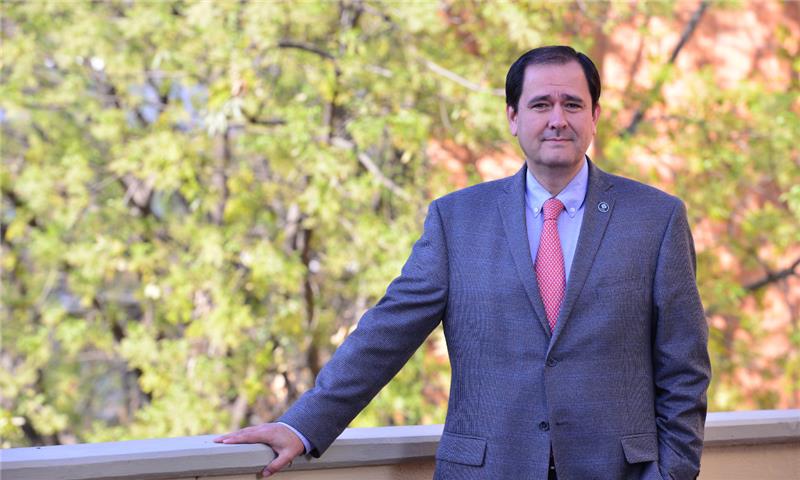
MC. Juan Carlos Martínez Alvarado